
Blog 10.
The name of this Japanese island is Shikoku, which translates as four (shi) + prefectures (koku), each like a county with its own jurisdiction, as well, of course, as its own pride and flair.
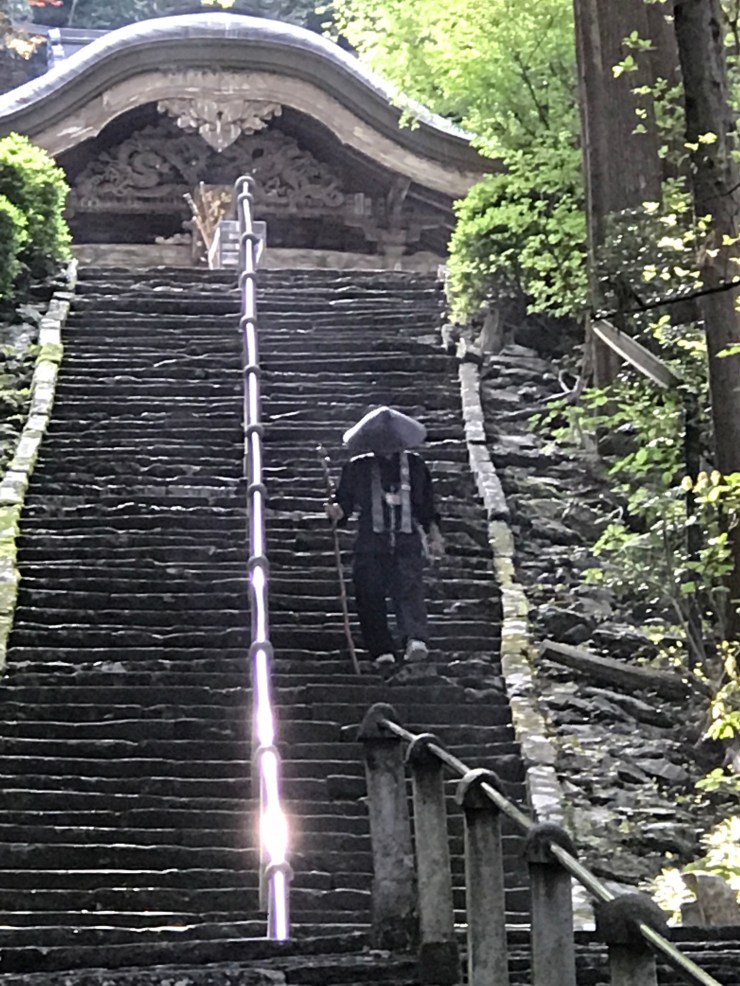
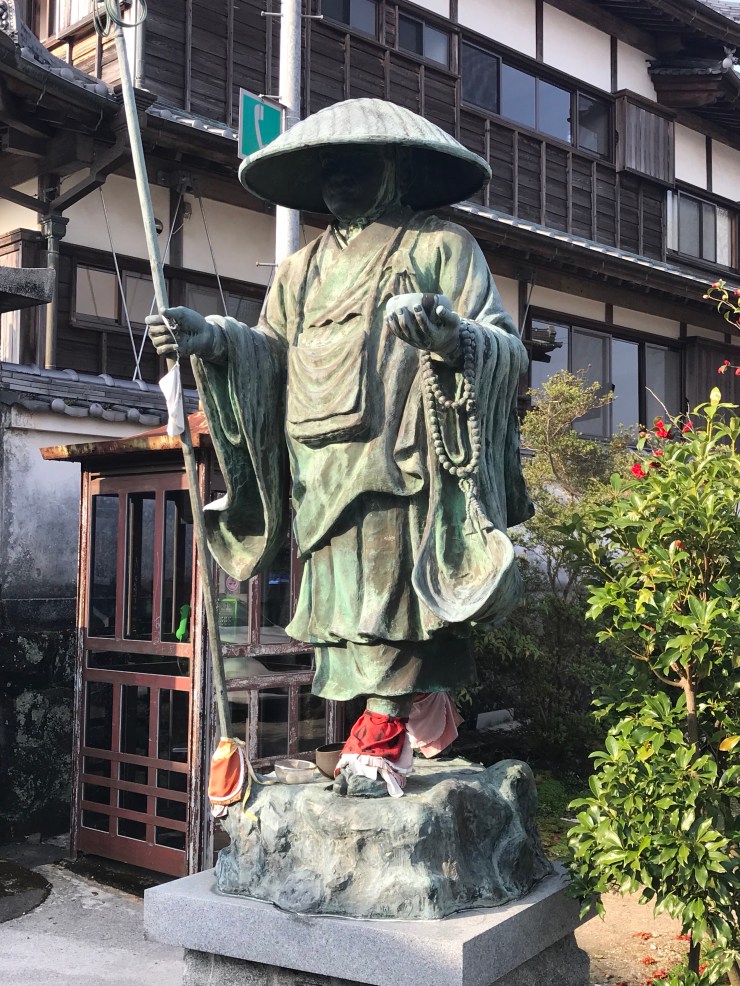
In terms of the Shikoku Henro Pilgrimage to the 88 sacred temples, each prefecture becomes a different Buddhist „dojo“ and takes on a different aspect of spiritual training:
- Tokushima prefecture (23 temples) is Hosshin dojo, place of Spiritual Awakening
- Kochi prefecture (16 temples) is Shugyo dojo, place of Ascetic Training
- Ehime prefecture (26 temples) is Bodai dojo, place of Enlightenment
- Kagawa prefecture (23 temples) is Nehan dojo, place of Nirvana
Now at about half-way through my pilgrimage, I have just crossed over from Kochi into Ehime, from the second into the third prefecture. The difference between the first two prefectures was noticable, as I mentioned previously, for beginner‘s curiosity and wonder, and the relative frequency of temples, made Tokushima go by in something of an excited blur.
Kochi was hard. It was discipline. The heatwave and the very long stretches of asphalt were gruelling, broken up by far fewer temples per hundred km. Another difference was that the red marker arrows indicating the henro route, so friendly and plentiful in Tokushima, were fewer and further between in Kochi, as though the pilgrim has been spoilt enough: now he can stand at a crossing scratching his head, perhaps make a few wrong turns, or resort more often to asking locals the way, for lack of arrows. Many a time I would have welcomed the sight of an arrow even if I knew I were on the right road, just for the reassurance and encouragement it gives, and for saving time not having to check the map so often. I am sure it was intentional, all part of Shugyo training.
Spring was over in a flash too. Sayonara sakura: the cherry blossoms were hardly there before it became Summer, adding to the difference. Honeymoon phase well and truly over, homesickness took hold.
But you don‘t come on a pilgrimage expecting it to be a picnic! You expect it to be a roller-coaster ride with ups and downs, with different types of days, or weeks.
The Shikoku Henro is not merely about visiting 88 special temples. If it were, everybody would do it by car, and it would be a temple experience. And neither is it just a long back-packing trek.
It is the combination of the walking and the temples that makes it a spiritual journey for me.
People do it for different reasons, and most people do it alone, perhaps even to be alone. It is an escape from everyday life for a while, and, depending on how long you can be on the route, it can make you appreciate everyday life more.
I am grateful to have the time and money to do the henro in its entirety, in one big trip, as slowly as I need to. Many people can only do it in bursts, in short sections at a time, or by vehicle.
Personally, I think you have to undertake the henro alone to get the most spiritual value out of it. Having someone with you like a friend or family member can have its benefits, but I think they cannot outweigh the benefits of being truly by yourself, responsible for no-one else, while on this pilgrimage. Free to be yourself, to go where you like, eat what you like, be spontaneous, change your mind, and, above all, free to make errors.
Oh, and free to spend as much time at the temple as you need.
I take it leisurely.
Entering the temple gate, I bow and go over to the water basin to purify my hands and mouth with the cooling water. My friend Matsu showed me how to rinse the ladle properly after use. It‘s all about respect.
The next step is to ring the temple bell, if there is one, and if it is allowed. Sometimes there are restrictions. Temple bells weigh over 250 kg and have a very loud and gorgeous vibration. Most bells are easy to spot and are open, but I have learned to look for bell-tower houses, as I think I might have missed a couple of bells that were enclosed. I put some money into the box, make a bow, pull the rope and give it some muscle. While it is ringing, I close my hands and eyes and try to meditate to the reverberations in my body until they have subsided.
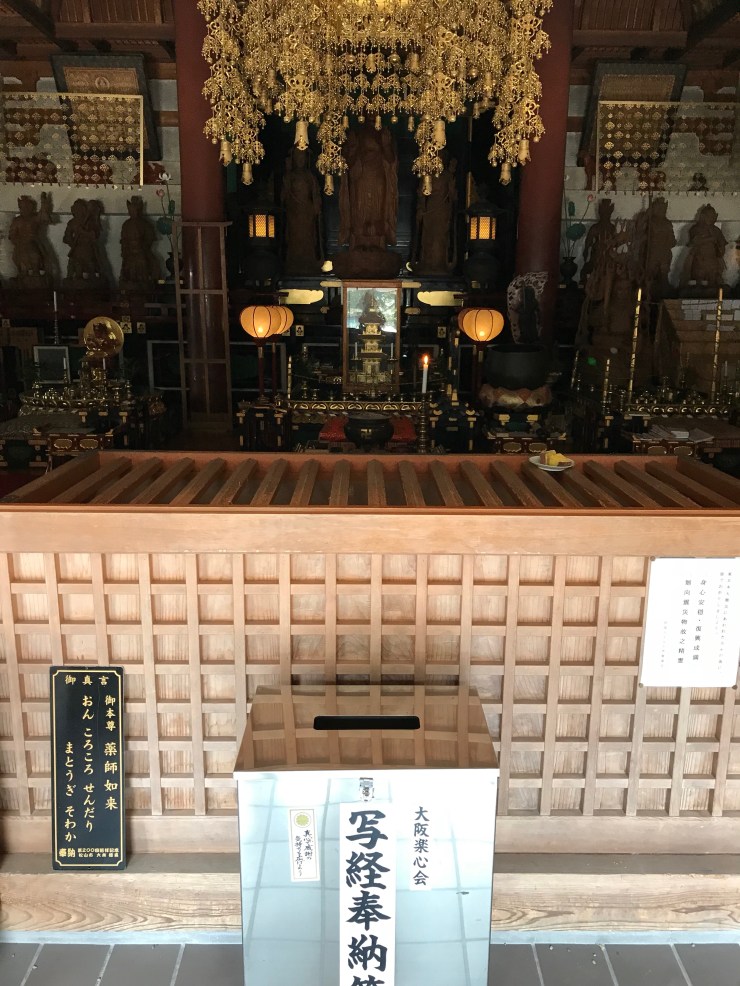
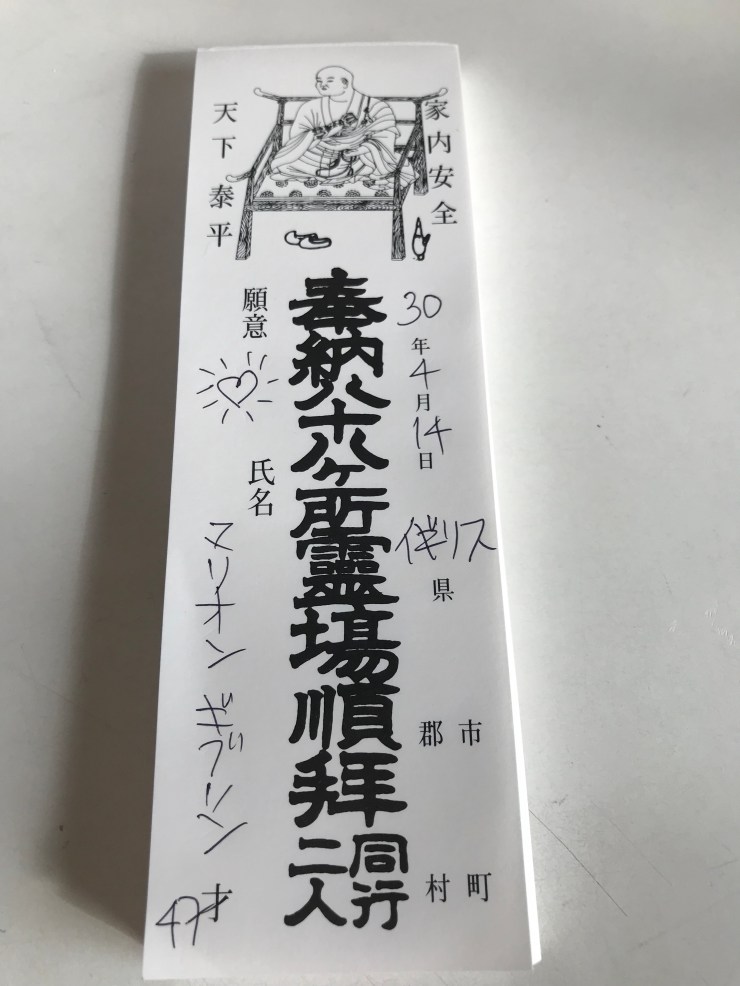
At both the Main Hall and Daishi Hall, enshrining the main deity of the temple and a statue of Kobo Daishi respectively, the routine is the same: most pilgrims will light a candle and three incense sticks (a step I omit) before placing a donation in the box and a nameslip with a wish on it in the recepticle for it. My wish is for Love & Light, which I mark with my henro „shining heart“ symbol.
Then I try and recite the Heart Sutra, the „Hannya Shin-Gyo“, or listen in to other people reciting it and try to follow.
It‘s a very rhythmical and fast chant and often a leader of a pilgrim group will hit two wooden blocks together in a mesmerising beat to keep the chanters in time.
I met a young monk who was kind enough to recite the Heart Sutra slowly together with me. I wish I had recorded it to play back. I think reciting the Heart Sutra is to pay respect to the deity, however, it is also a kind of meditative prayer. Even without knowing the meaning of the words, they simply have a beautiful effect. A few shorter sutras follow, wrapped up with a respectful bow of thanks.
I finish off with my own personal prayer on top, say Amen and then move on to the temple office to receive my official stamp and calligraphy in my book, watching entranced as this ritual takes place.
In Japan, you are not a „phoney“ pilgrim if you are not Buddhist, or even of no denomination. Japan is tolerant of all kinds of spirituality. You are respected regardless.
Despite the distinct feeling of discipline and long stretches of aloneness, a more peaceful feeling came over me in Kochi, as I got used to a new routine, and made the most of the temples.
As I start my first day‘s walking in the third dojo, I wonder what the next stage in Ehime prefecture will bring and hope now for some of that promised Enlightenment.
Sayonara for now xx


 Marion Gibson